

How to Test the Insulation Performance and Leak-Proof Capability of a Vacuum Flask?
Vacuum flasks, also known as thermos bottles, are essential for keeping beverages at the desired temperature and preventing spills when you’re on the move. Testing their insulation performance and leak-proof capability is vital to ensure product quality and reliability. In this blog, we will provide detailed steps to evaluate these two critical functionalities.
Why Insulation and Leak-Proof Testing Matter
Insulation performance measures how well the vacuum flask can maintain the temperature of its contents over time. Leak-proof capability ensures the flask provides a secure seal, preventing spillage. Both metrics are crucial for users who want convenience and dependability in their vacuum flasks.
Step-by-Step Guide to Test Insulation Performance
- Step 1: Fill the Flask with Hot or Cold Liquid – To test insulation, fill the vacuum flask with either boiling water or ice-cold water depending on the purpose. Make sure the flask is filled to near capacity.
- Step 2: Check Initial Temperature – Use a food thermometer to measure the initial temperature of the liquid inside the flask accurately.
- Step 3: Close the Flask Properly – Screw the lid tightly to ensure a secure fit, which also impacts insulation performance.
- Step 4: Note the Duration – Leave the flask for a predetermined amount of time, such as 6 hours, 12 hours, or 24 hours for testing.
- Step 5: Recheck the Temperature – After the set duration, reopen the flask and measure the temperature again using the food thermometer. Compare it with the initial temperature to evaluate heat or cold retention.
Step-by-Step Guide to Test Leak-Proof Capability
- Step 1: Fill the Flask with Liquid – Add water or any liquid to fill up the flask.
- Step 2: Secure the Lid – Ensure the lid is tightly screwed to simulate real-world usage.
- Step 3: Shake the Flask – Hold the flask upside down and shake it vigorously to test for any leakage.
- Step 4: Inspect for Leaks – Carefully examine the lid, spout, and seams of the flask for any signs of water or leaks.
Key Tips for Accurate Testing
- Use professional measurement tools like food thermometers for insulation tests.
- Conduct tests in controlled environments for best results.
- For leak-proof testing, check different positions such as upside down, sideways, and normal upright to cover all scenarios.
About Luckflask
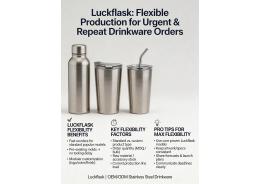
At Luck Flask, we specialize in manufacturing high-quality vacuum flasks designed to meet your insulation and leak-proof expectations. Our testing procedures ensure reliability and performance for every product. Visit Luck Flask’s website to browse more of our premium vacuum flask collections.
Conclusion
Testing the insulation performance and leak-proof capability of a vacuum flask is not just necessary but crucial for guaranteeing the product’s reliability. By following the steps outlined above, you can evaluate any vacuum flask with accurate results, ensuring its confidence for everyday use.



 English
 German
 French
 Russian
 Spanish
 Japanese
 Korean
 Portuguese
 Ukrainian
 Arabic
 Italian


