

Understanding the Differences Between FDA and LFGB Standards for Drinkware Products
When it comes to manufacturing and selling drinkware products, ensuring compliance with safety standards is crucial. Two prominent standards often discussed are the FDA (U.S. Food and Drug Administration) and LFGB (Lebensmittel- und Futtermittelgesetzbuch) standards. While both aim to ensure product safety, they differ significantly in scope, testing procedures, and applications. In this blog, we’ll dive into the key differences between these two standards.
1. FDA Standards Overview
The FDA oversees product safety for items sold in the United States. FDA standards for drinkware focus primarily on ensuring that materials in contact with food and beverages are safe for human consumption. Manufacturers must meet specific requirements for material composition, toxicity levels, and migration limits (e.g., leaching harmful substances).
Some key features of FDA standards include:
- Focuses on food-grade materials such as stainless steel, plastics, silicone, and coatings.
- Testing for heavy metals such as lead and cadmium, as well as chemical leaching.
- Applies to products sold or distributed within the U.S. market.
2. LFGB Standards Overview
The LFGB standard is the German Food and Feed Code, and it’s widely recognized across Europe as a benchmark for food safety compliance. This standard involves more stringent and comprehensive testing compared to FDA standards.
Some defining features of LFGB standards include:
- More rigorous testing procedures, including sensory and migration tests to ensure no odor or taste alteration in food or beverages.
- Ensures the highest safety and quality, with specific tests for long-term material stability.
- Mandated for products sold in Germany and often accepted across the European Union.
3. Key Differences Between FDA and LFGB Standards
While both FDA and LFGB are aimed at safeguarding consumer health, their testing focus and stringency vary significantly:
| Aspect | FDA | LFGB |
|---|---|---|
| Geographical Application | United States | Germany/European Union |
| Testing Rigor | Basic testing for harmful substances | Comprehensive testing; includes sensory and migration tests |
| Material Compliance | Focuses on food-grade materials | Includes consumer usage tests for stability and safety |
| Odor/Taste Testing | Not required | Mandatory |
4. Why Do These Standards Matter for Customers?
For customers, understanding these standards can help them make informed decisions. Products under FDA standards ensure baseline safety for daily use, whereas LFGB-certified products often demonstrate higher quality and stricter adherence to European safety laws.
5. Choosing the Right Standard for Your Needs
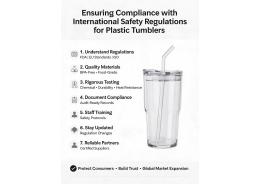
If you’re selling drinkware in the U.S., FDA compliance is non-negotiable. However, if you aim to cater to the European market or want to showcase superior product quality, seeking LFGB compliance is highly recommended. Balancing your product offerings to meet both standards can help you expand your global reach.
At Luck Flask, we prioritize compliance with international safety standards to ensure our drinkware products meet the highest quality benchmarks worldwide. Whether you’re searching for FDA-compliant or LFGB-certified products, we have you covered!

 English
 German
 French
 Russian
 Spanish
 Japanese
 Korean
 Portuguese
 Ukrainian
 Arabic
 Italian


