

Difference Between a Vacuum Flask and a Standard Insulated Bottle
When it comes to keeping your beverages hot or cold, choosing between a vacuum flask and a standard insulated bottle can be confusing. Both aim to retain temperature, but their underlying technology, performance, and use cases vary significantly. Let’s break down the key differences to help you pick the right option for your needs, with insights from LuckFlask’s expertise in thermal insulation.
1. Insulation Technology: The Core Difference
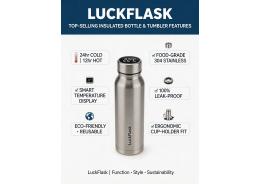
Vacuum Flask (Thermos Flask): A vacuum flask relies on a vacuum layer (a space with no air) between two stainless steel or glass walls. Since heat transfer via conduction and convection requires a medium (like air), the vacuum eliminates this medium. This design drastically reduces heat loss/gain, making it highly effective for long-term temperature retention. LuckFlask’s vacuum flasks, for example, use double-wall stainless steel with a vacuum-sealed gap to minimize thermal transfer.
Standard Insulated Bottle: These use insulating materials (like foam, plastic, or air-filled gaps) between layers. While they slow down heat transfer, the insulation isn’t as efficient as a vacuum. For instance, a bottle with a foam layer relies on the foam’s low thermal conductivity to reduce heat movement, but air or foam still allows some conduction/convection over time.
2. Temperature Retention Performance
- Heat Retention: A vacuum flask can keep coffee hot for 12–24 hours (or longer with premium models like LuckFlask’s), while a standard insulated bottle might only maintain heat for 4–8 hours. The vacuum’s lack of air means almost no heat escapes through conduction or convection.
- Cold Retention: For cold drinks (like iced water or juice), a vacuum flask can keep them chilled for 18–36 hours, whereas a standard insulated bottle may struggle to stay cold beyond 6–12 hours. The vacuum also prevents external heat from entering, preserving the cold interior.
3. Design and Durability
Vacuum Flask: Typically has a double-wall structure (e.g., stainless steel outer + inner wall) with a vacuum-sealed space. This design is more robust against impacts (especially stainless steel models) and often includes tight-sealing lids to prevent air leakage. LuckFlask’s flasks, for example, feature leak-proof lids and durable stainless steel construction for daily use and travel.
Standard Insulated Bottle: May have single or double walls with insulating material (e.g., foam) in between. They’re often lighter but less durable over time, as the insulating layer can degrade (e.g., foam compressing) or allow air to seep in, reducing efficiency.
4. Use Cases: When to Choose Each
Vacuum Flask (e.g., LuckFlask’s Thermal Models): Ideal for long trips (hiking, camping), office use (keeping coffee hot all day), or situations where temperature retention is critical for hours. Perfect for maintaining soups, tea, or cold water at consistent temps for 12+ hours.
Standard Insulated Bottle: Better for short-term use (commuting, gym, quick outings) where you’ll consume the beverage within 4–8 hours. They’re often more affordable and lighter, making them practical for daily, low-intensity use.
5. Cost and Affordability
Vacuum flasks (especially high-quality ones like LuckFlask’s) tend to cost more due to their complex manufacturing (vacuum-sealing technology, premium materials). Standard insulated bottles are generally cheaper, as their insulation relies on simpler materials (foam, plastic) and less precise construction.
Conclusion
The choice between a vacuum flask and a standard insulated bottle boils down to how long you need temperature retention and your usage context. If you want all-day (or multi-day) heat/cold retention, a vacuum flask (like those from LuckFlask) is unmatched. For shorter trips or budget-friendly daily use, a standard insulated bottle works. Whichever you choose, prioritize durability, seal quality, and material (stainless steel is best for longevity) to get the most out of your purchase!
Explore LuckFlask’s range of vacuum flasks and insulated bottles to find the perfect fit for your lifestyle.

 English
 German
 French
 Russian
 Spanish
 Japanese
 Korean
 Portuguese
 Ukrainian
 Arabic
 Italian


